Saint Louis Author: Andy Theising
The Saint Louis Author blog highlights the unique and surprising authors who live and write in Mound City.
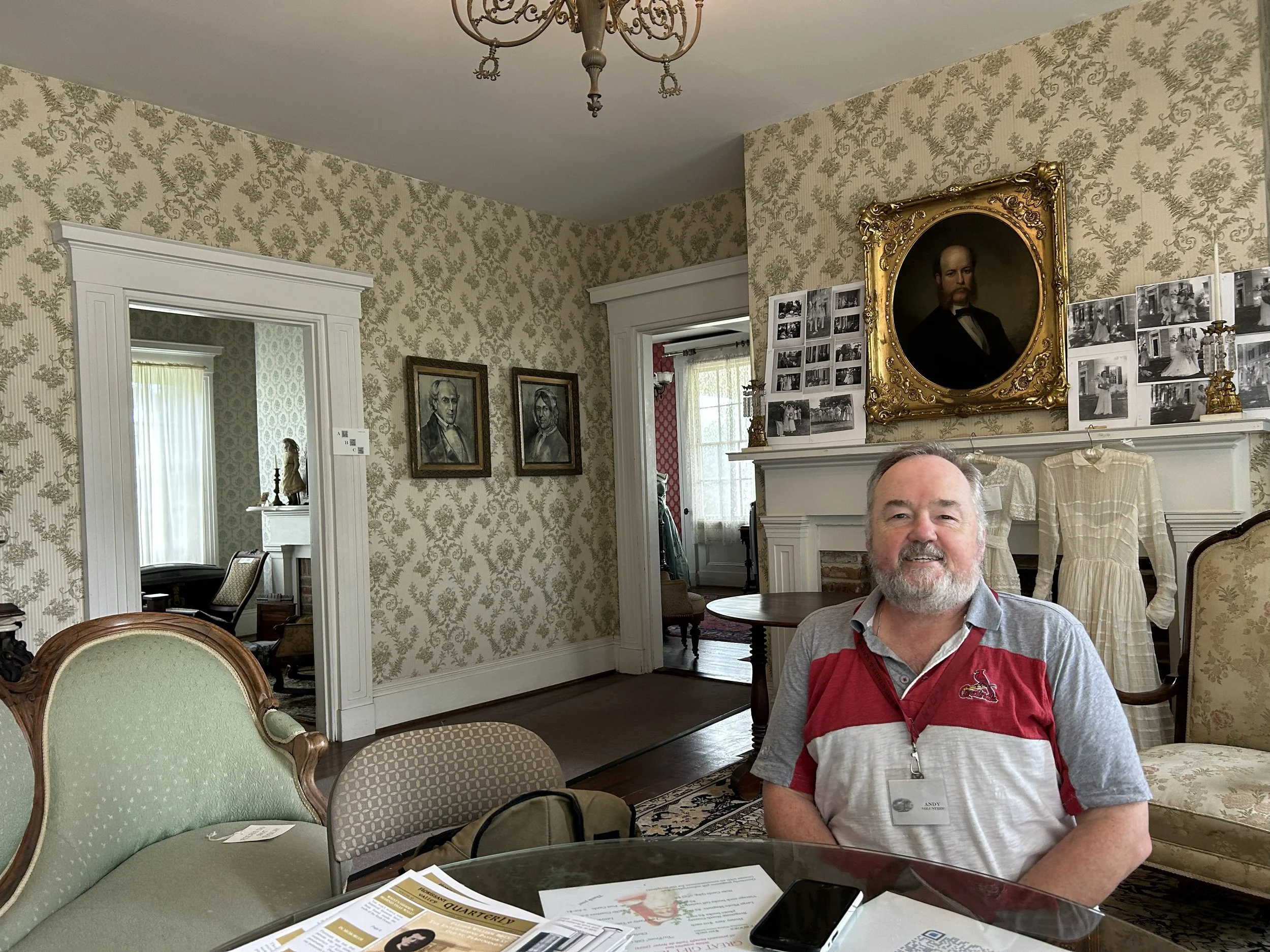
Andy Theising in the main room of the historic Taille de Noyer house in Florissant.
I first reached out to Andy in the summer of 2025 to ask about his work on In the Walnut Grove: A Consideration of the People Enslaved in and Around Florissant, Missouri, published in 2020 by The Florissant Valley Historical Society. I learned that in the Fall of 2024 he had published Mid-Mod Mayor: How Raymond Tucker Shaped St. Louis and he has since published two more books about the St. Louis region: Hell’s Half Acre: Along Bartmer Ave in St. Louis, Wellston, and University City and an expanded 20th Anniversary edition of his 2003 work, Made in USA: East St. Louis. It’s hard to keep up with Andy’s passion for regional history, urban studies, and political science. But here goes.
“I study cities,” Andy Theising said, during our first conversation. He is emeritus Professor of Political Science at Southern Illinois University at Edwardsville and taught for years through a special arrangement at the Brown School of Social Work at Washington University in St. Louis. In addition to serving on the board of The Florissant Valley Historical Society, he serves on the Board of the East St. Louis Historical Society.
To discuss In the Walnut Grove, Andy invited me to Taille de Noyer (which literally means “walnut grove”), first a cabin used as a trading post in the 1790s, then expanded into the larger antebellum home. It is one of the oldest homes in the region and is now a museum on the McCluer High School campus that also houses The Florissant Valley Historical Society, founded in 1958.
When the FVHS first published the book, Andy described being moved to write it due to the murder of Michael Brown a few miles from Taille, and by the New York Times 1619 Project. As we talked at the old wooden table in the main room of the since expanded historic home, I began to understand Andy’s deep connections to not only Taille de Noyer, but to the region’s broader history and his own family’s place in it.
“My aunt was a powerhouse of a little old lady and she was involved in historic preservation for the last half of her life. She is the reason Florissant has so many landmarks. She never had children but her nieces and nephews were with her. My introduction to historic preservation was carrying around a garbage bag full of debris at one of the sites she was preserving,” Andy said. He was been involved in historic preservation his whole life, preserving his aunt’s legacy. “The next generation has to step up.”
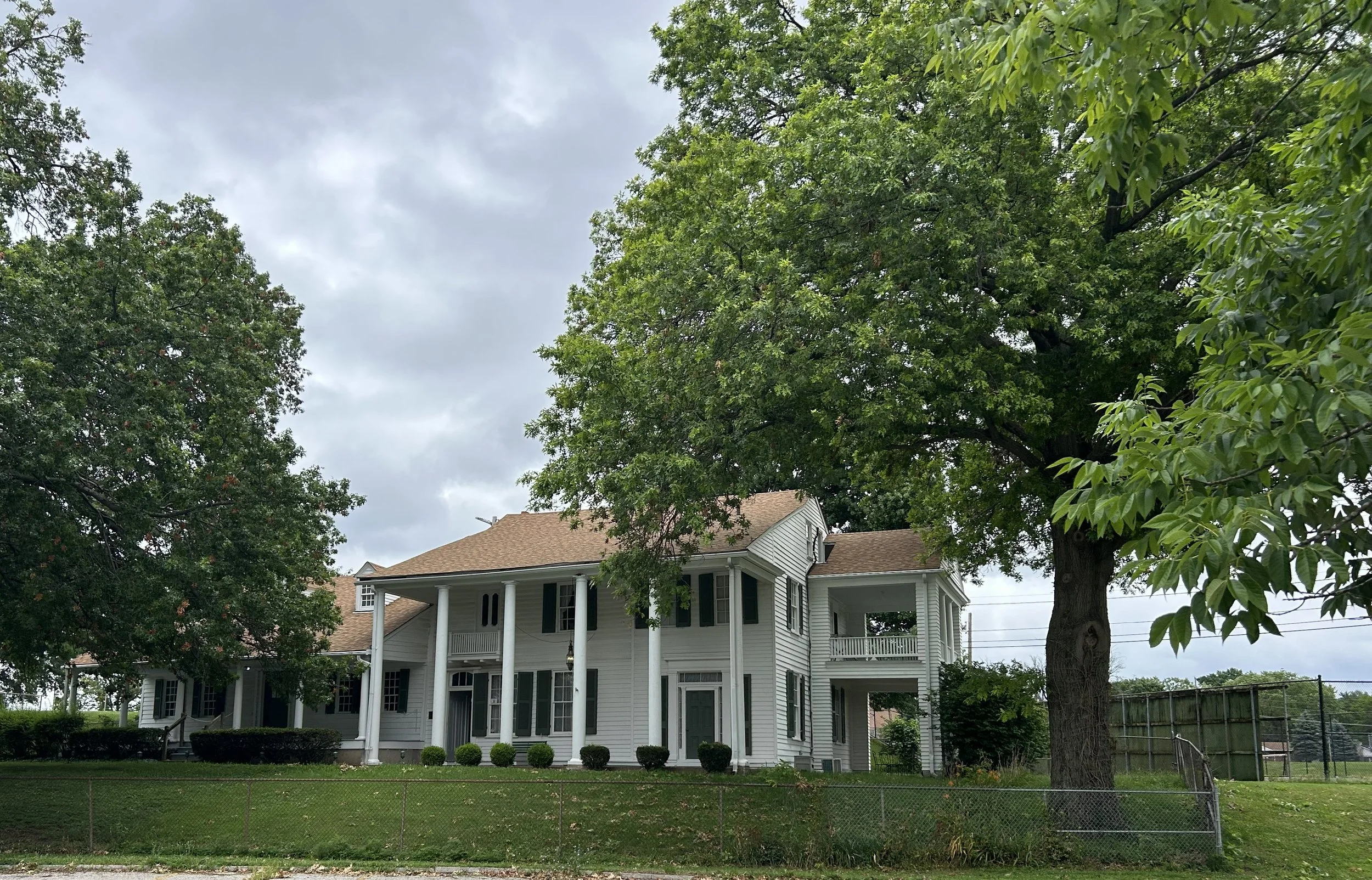
Taille de Noyer, on the grounds of McCluer High School in Florrissant, Missouri
Andy remembers walking through Taille de Noyer in 1988 with Lewis L Doss, Sr. Doss had lived there with his mother—who worked for Julius and Sarah Polk —in a smaller house behind the main house. That house and two old barns had been removed since Doss had last seen the house in the 1950s, but Andy was moved by Doss’s memories of the activities of the house, what happened in the rooms, and how he himself lived.
For Hell’s Half Acre, Andy took me on a driving tour of Bartmer Avenue. The book is a unique collection of colorful true crime, amusing and tragic stories that unfolded throughout the history of a single street that runs through St. Louis City into St. Louis County.
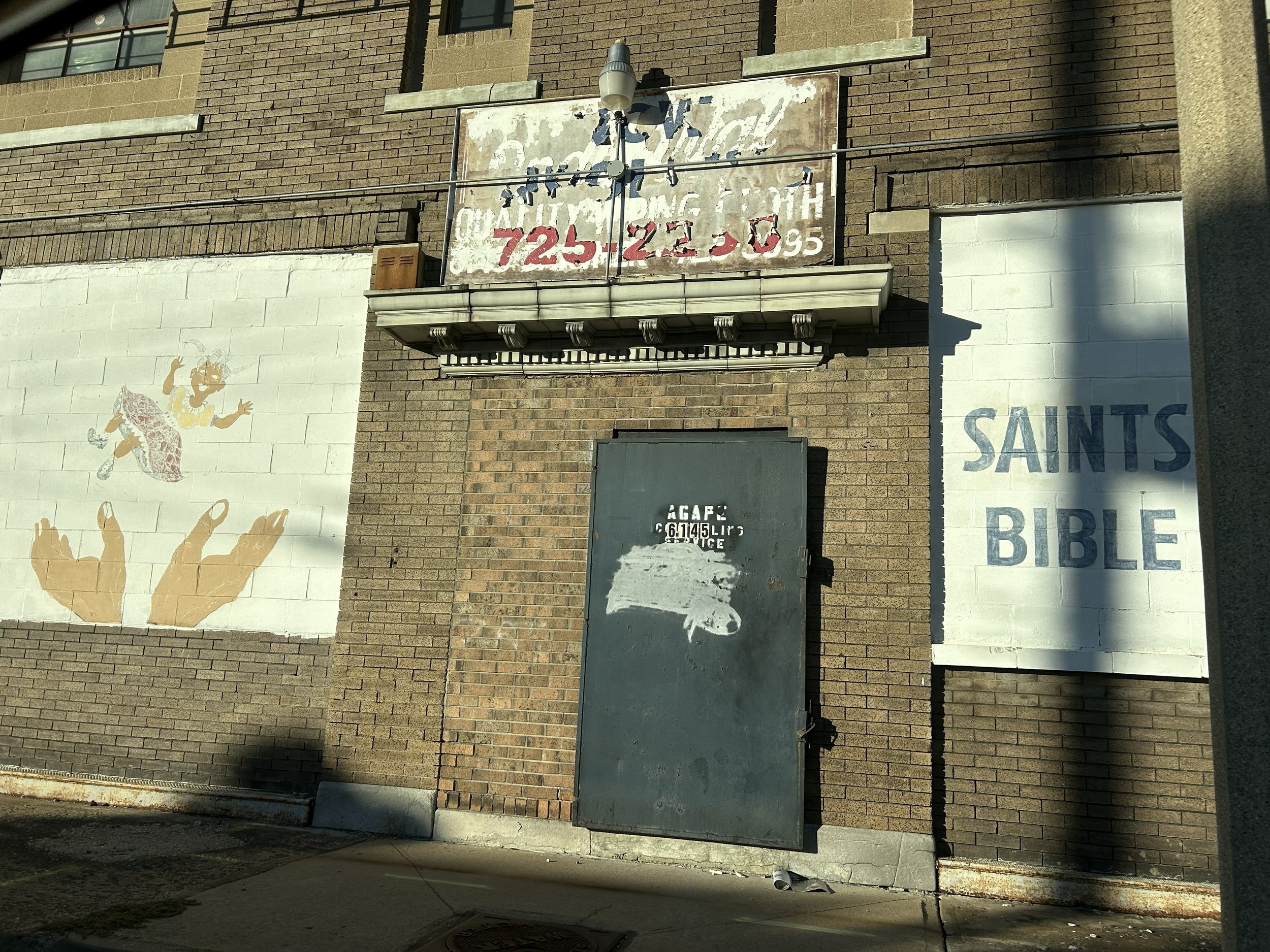
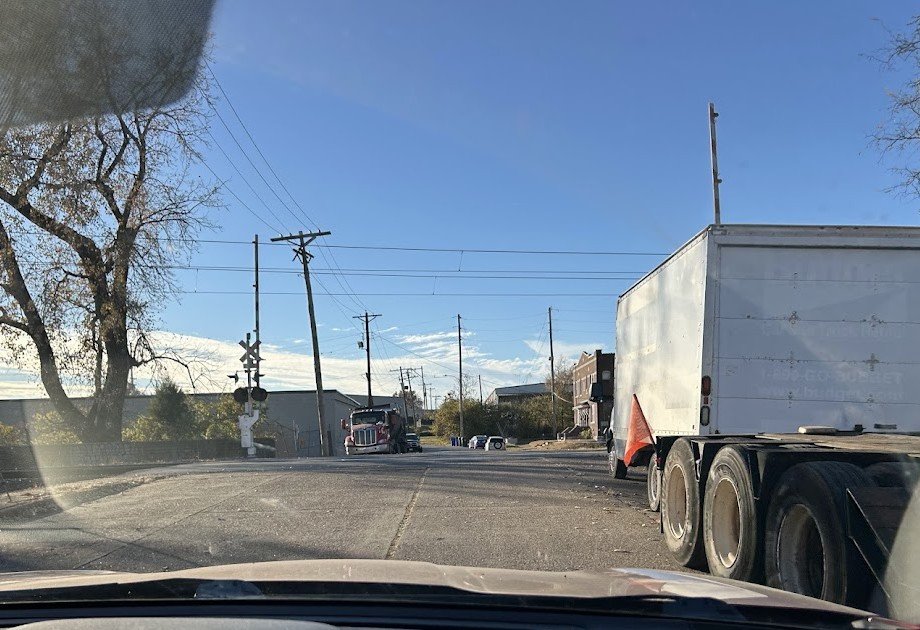
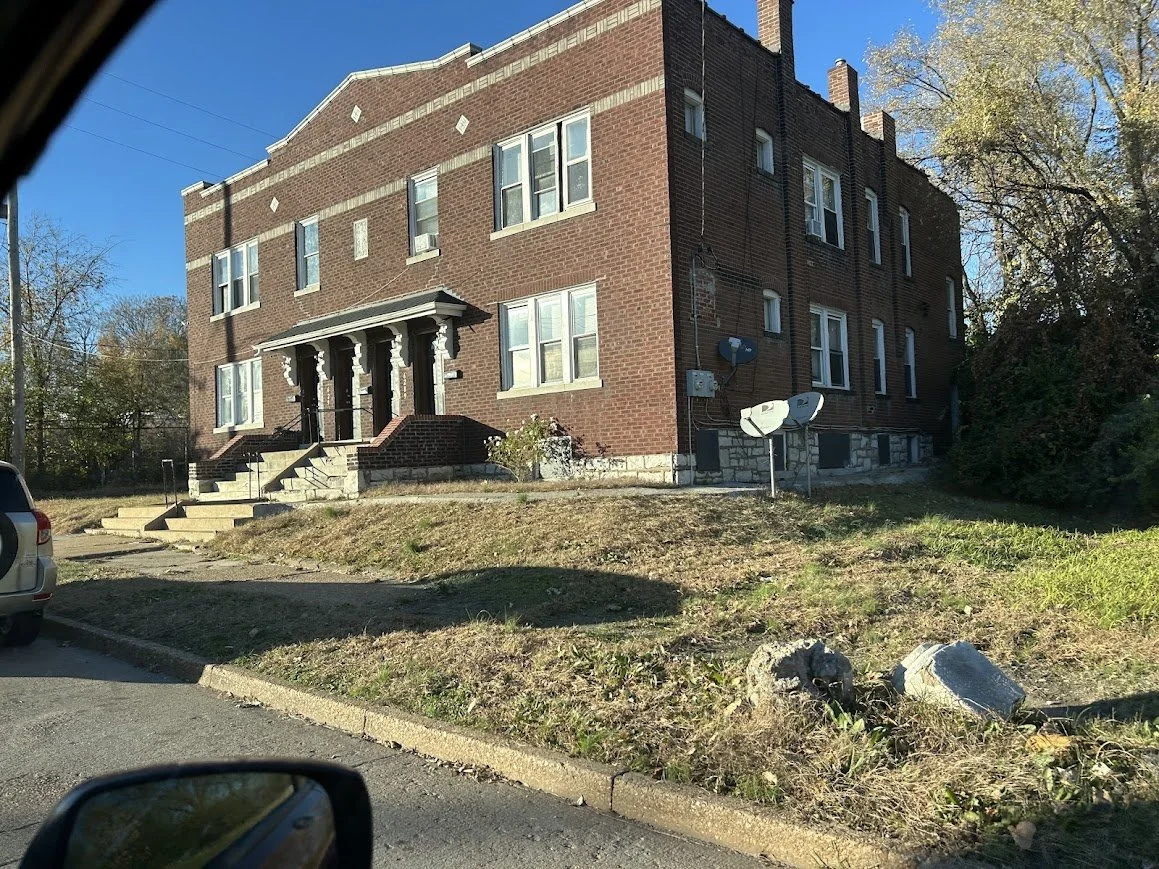
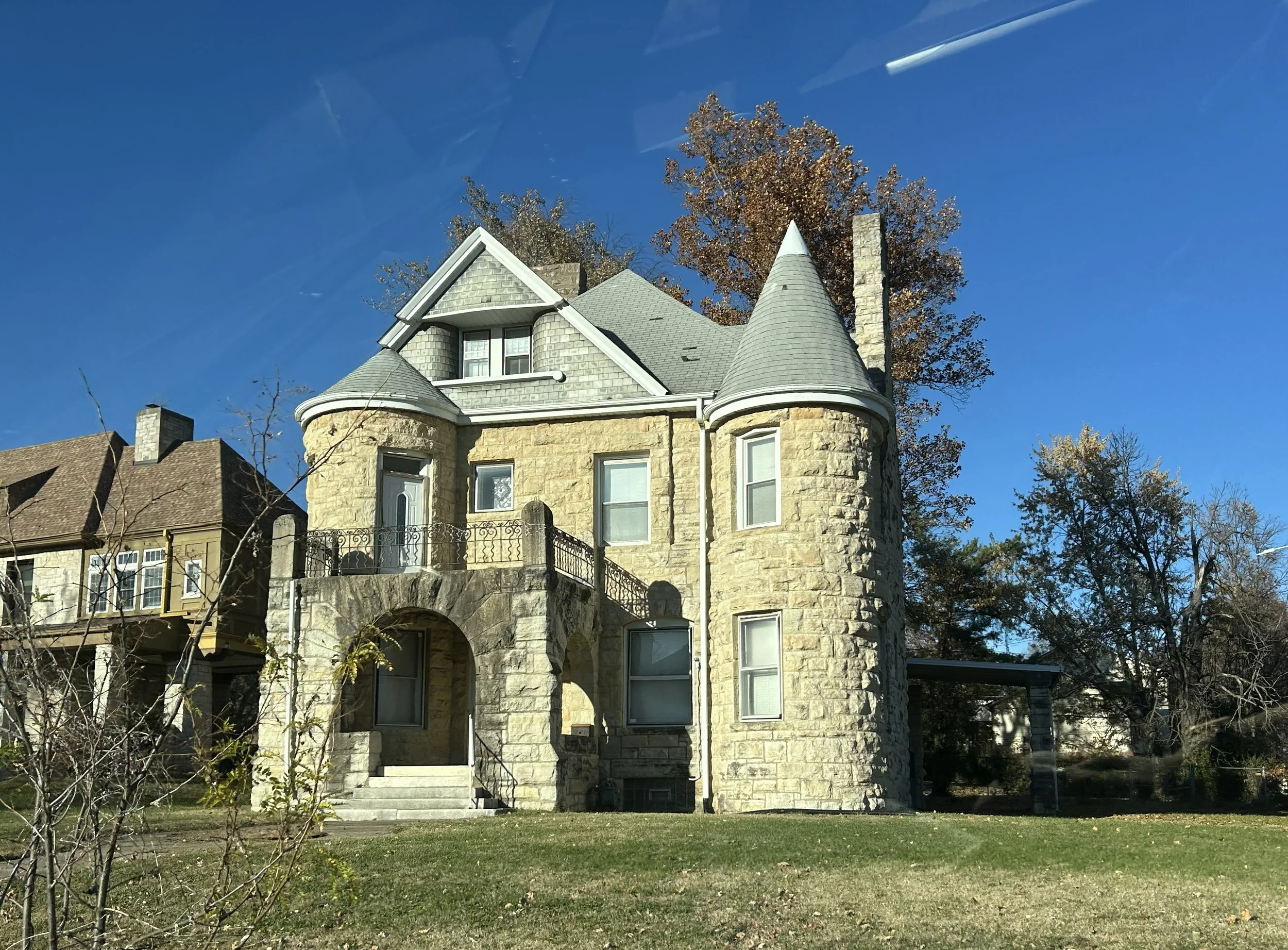
From left to right, addresses are 6145 Bartmer, 6281 Bartmer Industrial, 6291-6287 Bartmer, and 5553 Bartmer.
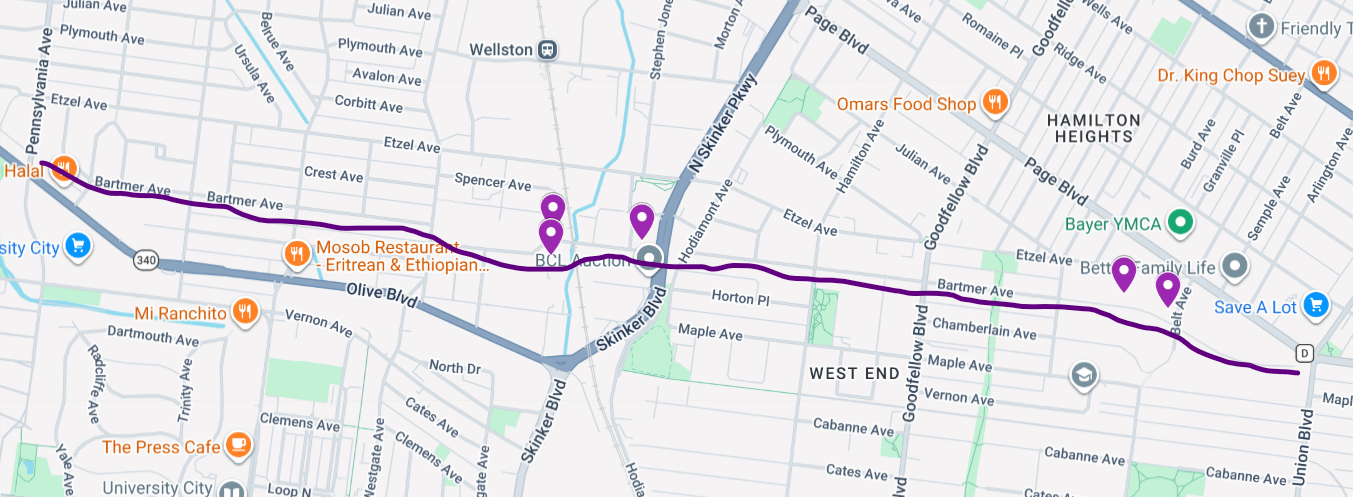
Bartmer Avenue runs from Pennsylvania Avenue in University City to Union Boulevard in St. Louis City. Purple locators represent the addresses in the photo gallery above.
As Andy points out in the book’s introduction, it is no longer possible to drive the length of Bartmer without interruption, so the tour involved many creative turns, but we started on the Union Boulevard end and eventually made it to University City. This approach gave me a feel for the diversity of the neighborhoods along the street and how radically they change over just a few miles. The book collects the unseen history as well—the buildings no longer standing, and the previously untold family stories. He became interested in the topic because as he did geneological research, he discovered family connections that lived on the street.
Made in USA: East St. Louis is the product of Andy’s dissertation research, completed while a PhD candidate at University of Southern Illinois: Edwardsville. The 20th anniversary edition is intended to remind readers of the city’s challenges.
“East St. Louis is losing its history every day, and so much of it is through neglect. Historic buildings are just crumbling,” Andy said. His efforts on the board of the East St. Louis Historical Society are a reflection of his committment to keeping the city’s history alive.
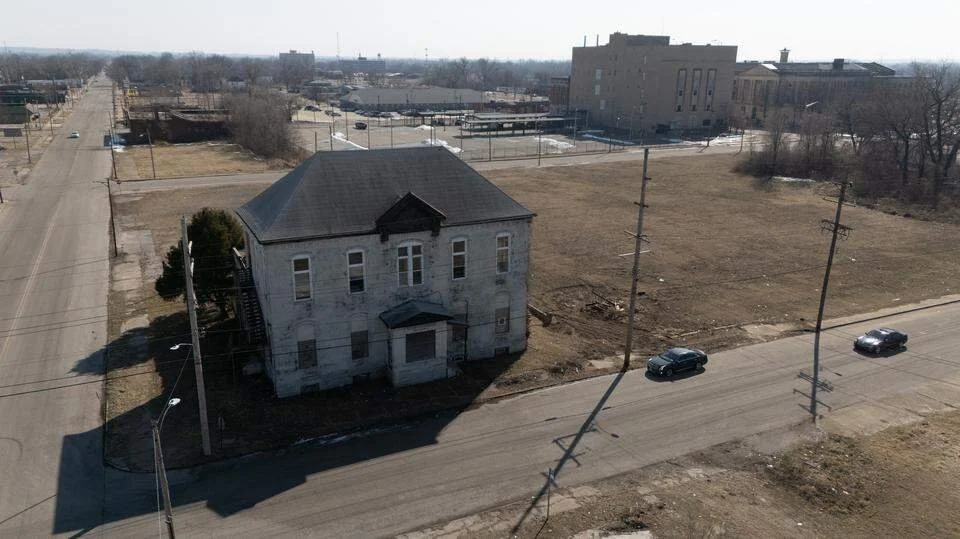
The East St. Louis Historical Society is working to save and occupy the Old Lincoln School at 240 N. 6th St. East St. Louis. Photo credit: Joshua Carter, Belleville News Democrat.
The East St. Louis Historical Society was formed by Reginald Petty, a civil rights activist since the 1960s. “Mr. Petty is like the grandfather of East St Louis. He cares so much about the city’s history and preserving it,” Andy said. The Society is in the process of trying to save, renovate and occupy the 1886 Lincoln School in East St. Louis, and has received support from the State of Illinois to do it.
Moving forward, Andy plans to start sharing what he knows about regional history in the more immediate medium of online video. “I've always been historically grounded in political science and I don’t think we we can understand the problems of today if we don't understand how they evolved. History is a big part of solving our region's problems,” he said. I’m looking forward to watching those videos.
To join the effort to save the 1886 Lincoln School in East St. Louis, visit The East St. Louis Historical Society website.